
Introduction to the USDOT’s decision
In a bold move, the U.
S. Department of Transportation (USDOT) has officially eliminated 52 regulations that have shaped the landscape of transportation in America. This decision is turning heads across various industries and raising important questions about what it means for businesses and consumers alike. As we delve into this significant regulatory shift, we’ll unpack what these changes entail and how they could reshape our daily commutes, shipping practices, and even safety standards on the roads. Buckle up; it’s going to be an enlightening ride!
Explanation of the 52 regulations that have been eliminated
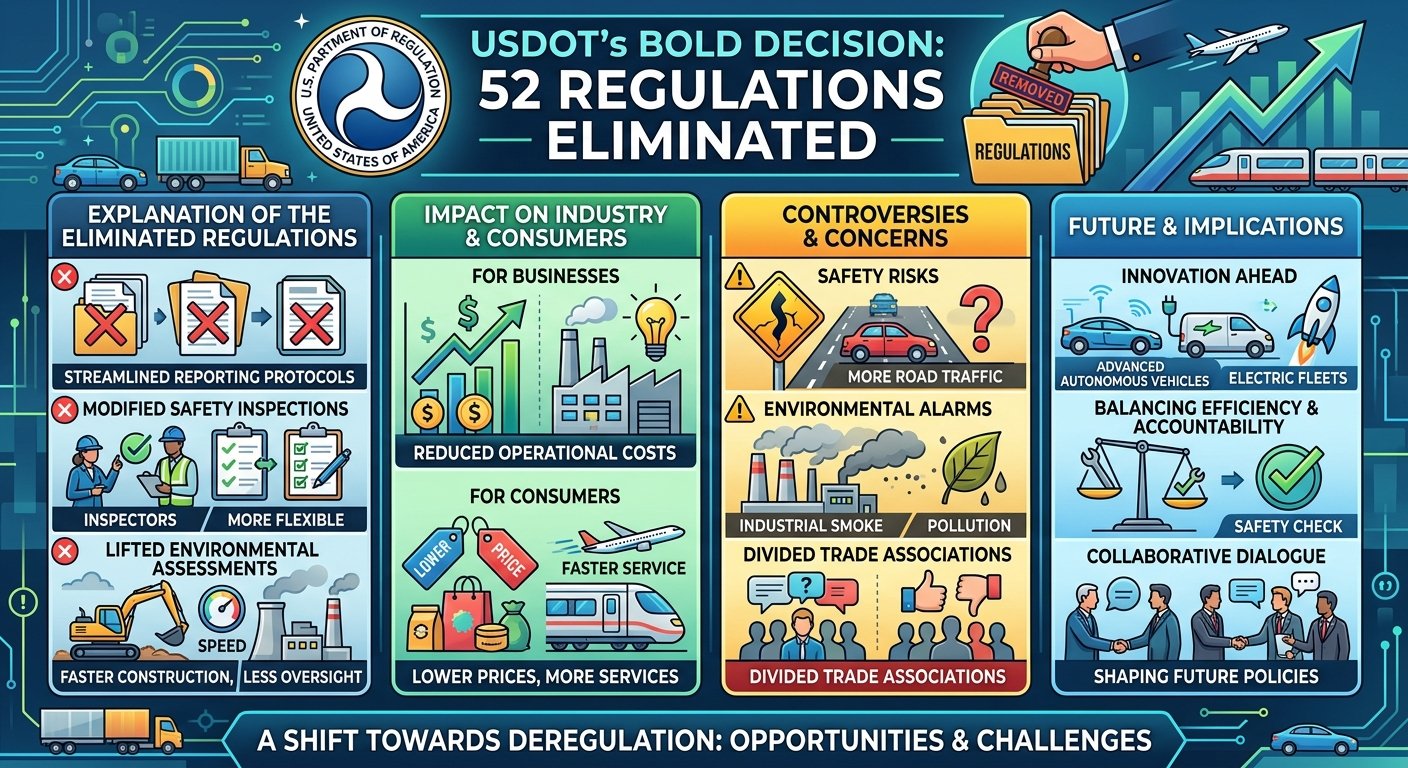
The USDOT has made headlines by eliminating 52 regulations that once governed various aspects of the transportation sector. These changes aim to streamline operations and reduce bureaucratic hurdles.
Among the eliminated regulations were requirements for specific reporting protocols, which many found redundant. This move is seen as a step towards lessening the administrative burden on smaller businesses within the industry.
Safety inspections have also undergone significant modifications. Certain pre-existing safety checks may now be more flexible, allowing companies greater freedom in maintaining compliance while prioritizing efficiency.
Additionally, some environmental assessments tied to infrastructure projects have been lifted. The goal here is to expedite project timelines without compromising public safety or overall accountability.
These adjustments reflect a wider trend toward deregulation and are expected to reshape how transportation entities function moving forward.
Impact on transportation industry and consumers
The elimination of 52 regulations by the USDOT could lead to significant shifts in the transportation industry. For businesses, this means potentially reduced operational costs and increased flexibility. Companies might find it easier to innovate without some regulatory constraints.
Consumers may also feel these changes directly. Lower compliance costs for companies could translate into lower prices for goods and services. Additionally, we might see an increase in service offerings as businesses adapt to new opportunities.
However, there is a flip side. Reduced regulations can compromise safety standards and environmental protections, raising concerns among consumers about their well-being on the road or when using public transportation systems.
While efficiency gains are likely beneficial, they come with important considerations that must be navigated carefully by both industry players and regulators alike.
Controversies surrounding the decision
The elimination of 52 regulations by the USDOT has sparked considerable debate. Critics argue that removing these guidelines could compromise safety standards within the transportation sector. Concerns are mounting about potential increases in accidents and incidents due to less oversight.
Environmental advocates also express alarm. Many believe that deregulation may lead to a rise in pollution levels, as companies might prioritize profit over eco-friendly practices without stringent rules.
On the other side, proponents claim this move will foster innovation and efficiency. They argue that outdated regulations stifle growth and burden businesses with unnecessary compliance costs.
Trade associations find themselves divided as well. While some welcome reduced red tape, others worry about long-term ramifications for public trust in transportation systems.
This multi-faceted controversy reflects deeper issues regarding regulation’s role in balancing economic interests with public welfare.
The future of transportation regulations in the US
As the USDOT moves forward after eliminating 52 regulations, the landscape of transportation in the US is poised for transformation. This shift could pave the way for more innovative practices and technologies.
With fewer regulatory hurdles, companies may feel encouraged to invest in advanced solutions like autonomous vehicles and electric fleets. The potential benefits are vast, from increased efficiency to reduced emissions.
However, a relaxed regulatory environment also raises questions about safety standards and accountability. Striking a balance will be crucial as new policies emerge.
Stakeholders—from large corporations to everyday commuters—are likely to engage in discussions about how best to shape these future regulations. Collaboration between government agencies and industry leaders will play a pivotal role in ensuring that innovation does not come at the expense of public safety or environmental sustainability.
The road ahead promises both challenges and opportunities as regulators adapt to an evolving transportation ecosystem.
What this means for businesses and individuals
The elimination of 52 regulations by the USDOT brings significant changes for both businesses and individuals in the transportation sector. For companies, this could mean a reduction in compliance costs and increased operational flexibility. Streamlined processes may allow for quicker decision-making and innovation.
Individuals might notice improvements in service availability as competition increases without heavy regulatory burdens. Companies can adapt faster to consumer needs, potentially resulting in better pricing and enhanced services.
However, there’s a flip side. The loosening of regulations may lead to concerns about safety standards or environmental impacts that were previously safeguarded. Businesses will need to navigate this new landscape carefully.
Consumers should stay informed about how these changes affect their rights and protections when using transportation services. Engaging with service providers on their practices will be vital as everyone adjusts to this evolving environment.
Conclusion
The recent decision by the USDOT to eliminate 52 regulations marks a significant shift in the landscape of transportation policy. While this move aims to streamline processes and reduce bureaucratic hurdles, it also raises important questions about safety, accountability, and consumer protection.
For businesses within the transportation sector, these changes could mean lower operational costs and increased efficiency. However, companies must remain vigilant regarding compliance with other existing regulations that ensure public safety.
Consumers may experience some benefits from reduced costs passed down from businesses. Yet, there is also concern about whether removing these regulations might compromise their rights or safety on the roads.
As discussions continue around this major overhaul, stakeholders will need to engage in meaningful dialogue about what future transportation regulations should look like. The balance between deregulation and necessary oversight will be crucial as we navigate an evolving industry landscape.
Understanding how these changes impact daily life—both for companies and individuals—is essential as we move forward in this new regulatory environment shaped by USDOT’s bold decisions.
